Clone 3D | Specialists in Industrial SLA, MSLA and FDM Printing. Over 10 Years Of Local Service & Local Printing in Auckland NZ
What file type do you require
There are several file types we can accept, the main two are STL or STP. We also accept OBJ, 3MF, XT or STEP
File Naming Conversions
Having the quantity required at the beginning of your filename is a huge help. For example “x3_EndpartSlotl_v4_M2”
Are you sending a hollowed part? Including that in your filename also helps.
Example: “x3_hollow_EndpartSlotl_v4_M2”
What is the maximum file size allowed?
The maximum file size via email is around 20mb, zipping files into a folder can help to reduce the overall size.
For larger files we recommend using WeTransfer.com, it’s free and easy to use. Or the usuals, Dropbox, Box, Google Drive etc.
Can I combine and send multiple parts into a single file?
Please avoid saving multiple parts in a single file, doing so might result in inaccurate pricing or broken files when separating them out.
Please also avoid spru-ing parts together to make “one part” without discussing with us first as this can limit options for print orientation, and can result in lower quality prints.
How strong is an SLA part?
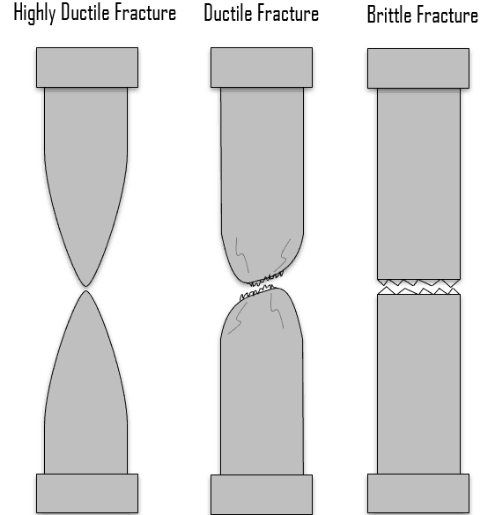
Typically speaking SLA is more brittle than other printing technologies, however, SLA prints are largely isotropic once fully cured. Layers are chemically (covalently) bonded to one another during the SLA printing process, and so SLA printed parts will have the same mechanical properties in each direction as opposed to FDM and SLS which has a substantially weaker ‘Z’ axis.
The strength and or durability of a part is influenced by its design and whether it incorporates sufficient reinforcement to withstand the intended stresses. If you supply information with your file using our quote server, we will get back to you with any concerns.
How to think about the type of strength you're after
Do you need the part(s) to:
Stay rigid -minimal flex (more brittle) Slightly less rigid – bit of flex before break (less brittle)
Compression strength refers to a plastic’s ability to withstand forces attempting to compress or shorten it (ABS-Like, High Temp, PP-like)
Bending strength assesses the plastic’s resistance to deformation when subjected to forces that bend or flex it. (PP-like, to a certain extent ABS-like)
Torsional strength, on the other hand, gauges a plastic material’s ability to endure twisting or rotational stresses (PP-like)
Examples of when you may need particular types of strength
Vacuum moulds/ moulds/ Part required to be very rigid even when warm: High Temp
Prototype, visual model/ Part required to be rigid and accurate + look good ABS-like White
Prototype, visual model/ Part needs to have some flex and higher ductility, may need some clarity but can be painted. PP-Like